2026 Toyota 4Runner vs. Ford Bronco: Which SUV Wins?
When Middle Tennessee families start comparing capable SUVs, the 2026 Toyota 4Runner and the 2026 Ford Bronco often end up on the same shortlist. Both are body-on-frame off-roaders with serious credentials, but they serve different buyers in different ways. This article breaks down pricing, cargo space, performance, fuel economy, technology, safety, and long-term ownership factors so you can make a confident decision before you visit Roberts Toyota at 1027 Nashville Hwy, Columbia, TN 38401.
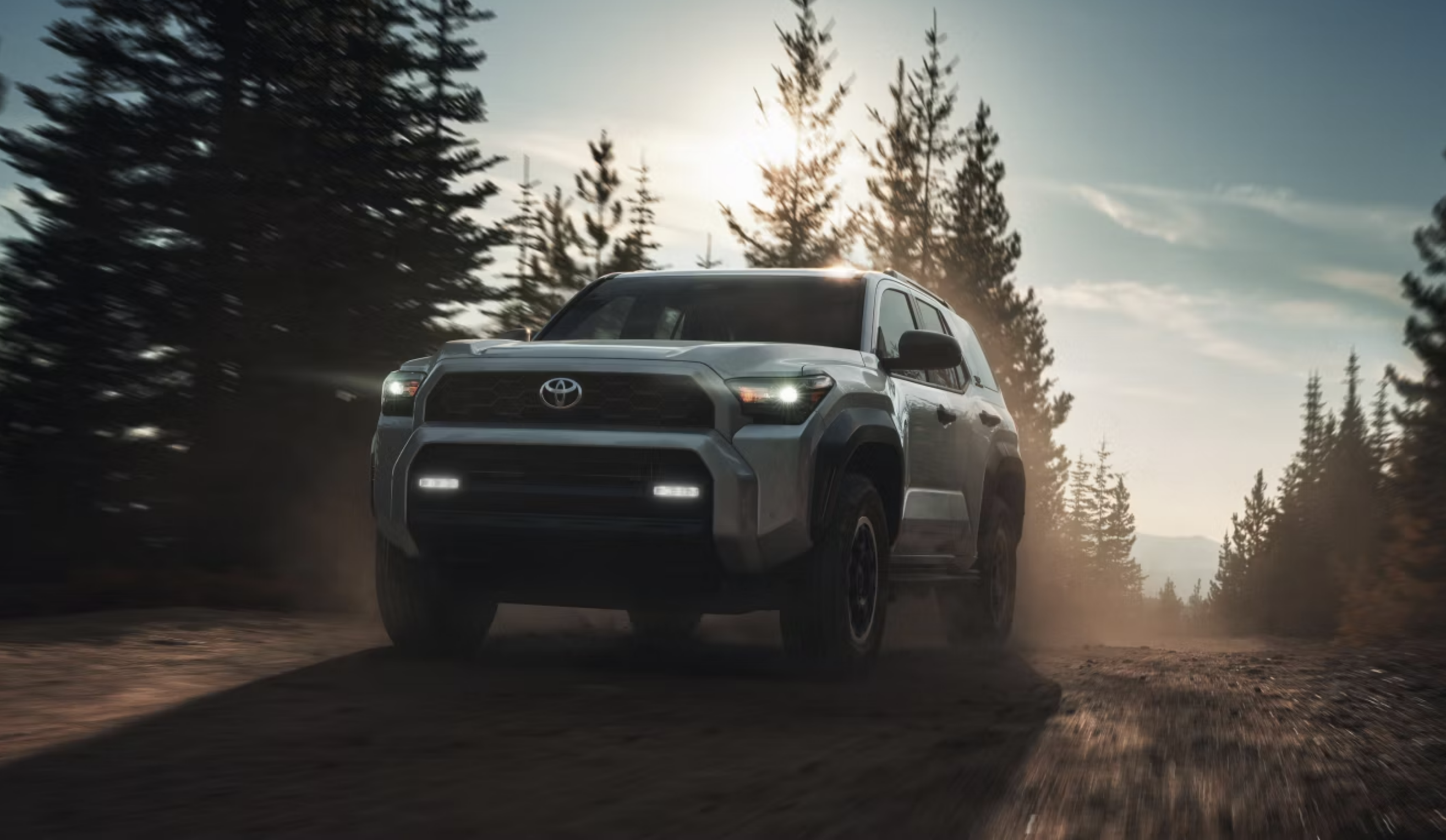
Why Columbia Families Are Choosing Between the 2026 Toyota 4Runner and Ford Bronco
The SUV market in Middle Tennessee is competitive, and for good reason. Families here need vehicles that can handle the school run on a Tuesday morning and a boat-launch ramp on a Saturday afternoon. The 2026 Toyota 4Runner and the 2026 Ford Bronco both promise that versatility, but their price structures and day-to-day strengths tell two different stories.
Toyota's 2026 4Runner lineup opens with the SR5 at $42,070 base MSRP, moves to the Limited at $56,700 base MSRP, and includes the Platinum at $64,160 base MSRP. Ford's Bronco starts lower, though pricing varies significantly by trim, body style, packages, destination charge, and selected options.
On paper, the Bronco can look like the more accessible entry point. But price tags alone do not tell the full story, especially when cargo space, towing capacity, family comfort, and standard safety technology matter.
The 4Runner is designed as a fully enclosed family SUV with strong cargo utility and up to a 6,000-lb towing rating when properly equipped. That makes it genuinely useful for hauling a boat to a nearby lake or a camper to a campsite.
The Bronco, by contrast, is engineered around open-air adventure and extreme off-road capability. It earns its place for buyers who prioritize raw trail capability, removable-door fun, and specialized off-road hardware, while the 4Runner covers more real-world family ground for many Roberts Toyota shoppers.
Dimensions & Capacity
Capacity and dimensions vary by trim, body style, drivetrain, and equipment.
| Specification | 2026 Toyota 4Runner | 2026 Ford Bronco |
|---|---|---|
| Seating | 5 passengers standard; available third-row seating on select trims | 4 or 5 passengers, depending on body style and configuration |
| Cargo Space | Up to about 48 cu. ft. behind the second row, depending on configuration | Varies by 2-door/4-door body style and roof configuration |
| Maximum Towing | Up to 6,000 lbs. when properly equipped | Most Bronco models tow up to 3,500 lbs.; Bronco Raptor can tow up to 4,500 lbs. |
| Best Fit | Family utility, towing, enclosed cargo, everyday comfort | Open-air adventure and specialized off-road hardware |
Comparing Cargo and Passenger Space for Active Families
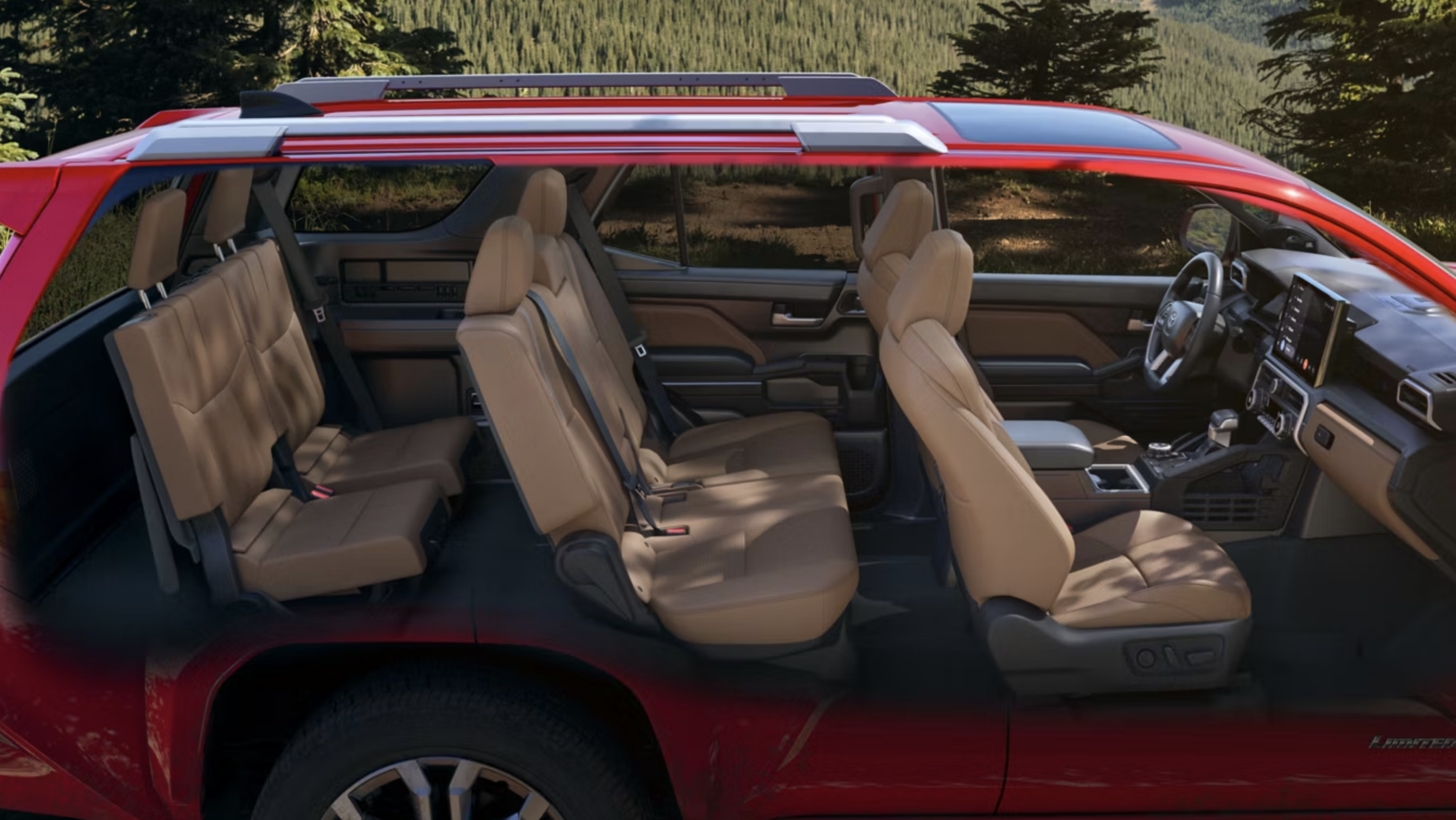
Picture a Saturday morning in Spring Hill: two adults, three kids, a cooler, two bags of soccer gear, and a folding canopy that needs to fit in the vehicle. This is the moment where cargo specs stop being numbers on a page and start mattering in real life.
The 2026 Toyota 4Runner gives families a spacious enclosed cargo area, standard five-passenger seating, and available third-row seating on select trims. For families who regularly transport kids, carpools, or extended family, that flexibility is significant.
The 2026 Ford Bronco's cargo picture is more complicated because it depends heavily on whether you choose a 2-door or 4-door model and which roof configuration you select. Even at its most practical, the Bronco is more adventure-focused than family-cargo-focused.
Towing capacity separates these two SUVs clearly. The 4Runner can tow up to 6,000 lbs. when properly equipped, while most Bronco models are rated for up to 3,500 lbs. and Bronco Raptor increases that to 4,500 lbs.
For the majority of families whose priority is seating, covered cargo space, and towing capability, the 4Runner has the stronger practical advantage.
Power and Handling for Middle Tennessee’s Rolling Terrain
Middle Tennessee's rolling terrain rewards vehicles that balance confident highway manners with genuine off-road composure. Both of these SUVs bring serious powertrain credentials, but they approach performance from different philosophies.
The 2026 Toyota 4Runner uses an i-FORCE 2.4L turbocharged four-cylinder engine producing 278 hp and 317 lb-ft of torque, paired with an 8-speed automatic transmission. Select trims also offer the i-FORCE MAX hybrid powertrain with 326 hp and 465 lb-ft of torque. Rear-wheel drive is standard on some trims, while four-wheel drive is available or standard depending on configuration.
The 2026 Ford Bronco offers serious trail hardware, including standard 4x4 capability and available off-road systems depending on trim. The 2.3L EcoBoost engine and available automatic or manual transmission options give it strong enthusiast appeal, while higher-performance Bronco configurations add even more trail-focused equipment.
Engine & Performance
Powertrain specifications vary by trim and configuration.
| Specification | 2026 Toyota 4Runner | 2026 Ford Bronco |
|---|---|---|
| Standard Engine | 2.4L turbocharged i-FORCE 4-cylinder | 2.3L EcoBoost 4-cylinder |
| Standard Horsepower | 278 hp | Varies by engine and fuel type; confirm with Ford specifications |
| Available High-Output Option | i-FORCE MAX hybrid: 326 hp / 465 lb-ft | Available higher-output Bronco configurations depending on trim |
| Transmission | 8-speed automatic | 7-speed manual standard on select trims; 10-speed automatic available/standard depending on trim |
| Drivetrain | RWD or 4WD, depending on trim/configuration | 4x4 |
Fuel Efficiency and Range That Fit Daily Commutes and Weekend Adventures
Fuel costs are a real consideration for any household running a daily commute alongside weekend recreation. The 2026 Toyota 4Runner offers competitive fuel economy for a body-on-frame SUV, especially when compared with more trail-focused Bronco configurations.
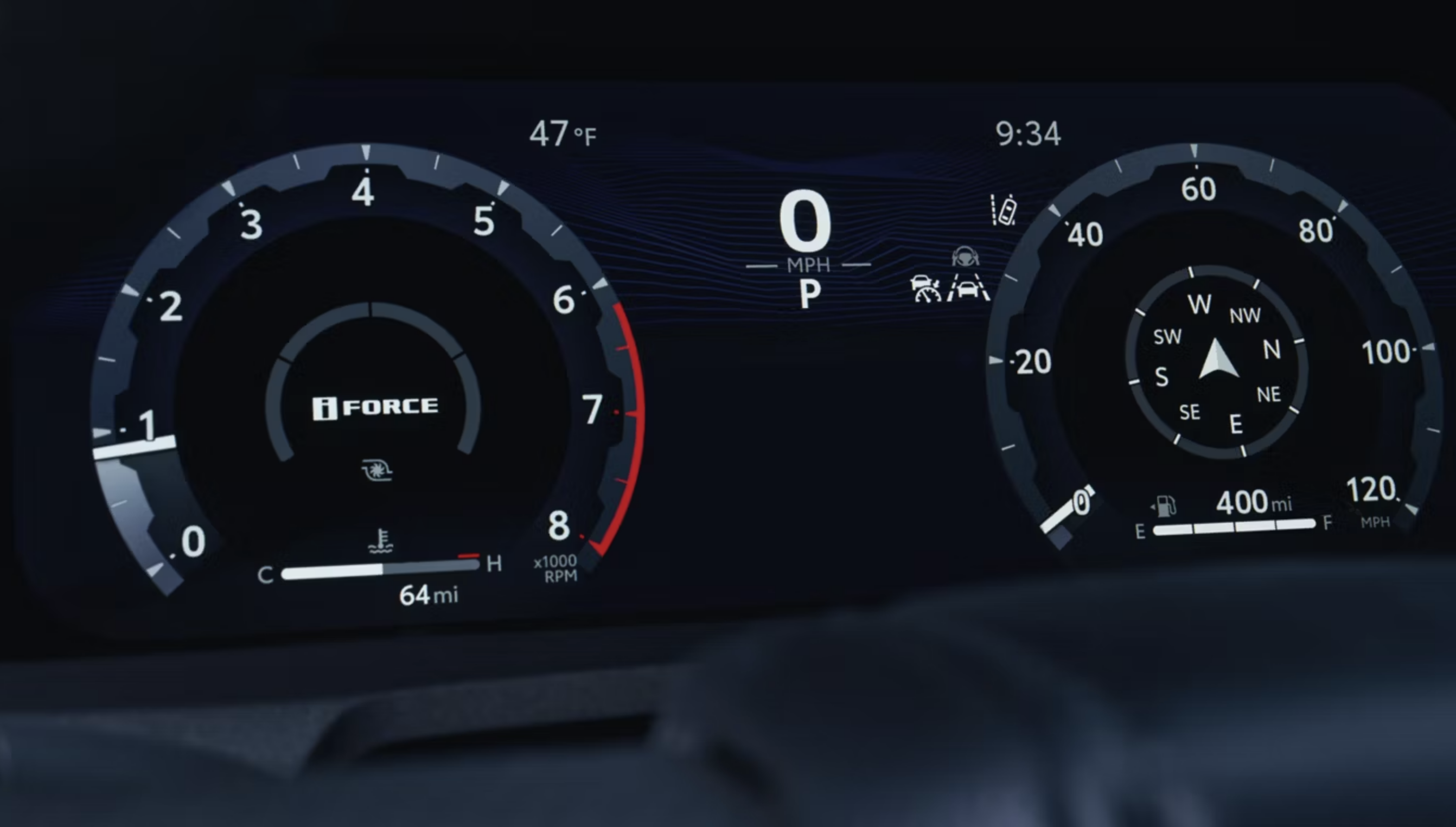
Toyota lists 2026 4Runner fuel economy ratings such as 20 city / 24 highway MPG on certain trims, with mileage varying by powertrain and drivetrain. Hybrid i-FORCE MAX models can also improve city efficiency while adding significant torque.
The 2026 Ford Bronco’s fuel economy varies widely by engine, body style, tires, and off-road equipment. Trail-focused configurations may deliver lower fuel economy than more street-oriented models, so shoppers should confirm the exact Monroney label for the vehicle they choose.
For buyers who want both weekend capability and reasonable weekday efficiency, the 4Runner is the more practical choice. The Bronco’s off-road-first engineering can come at a real cost at the pump depending on configuration.
Fuel Economy
| Specification | 2026 Toyota 4Runner | 2026 Ford Bronco |
|---|---|---|
| EPA-estimated MPG | Varies by trim and drivetrain; Toyota lists 20 city / 24 highway MPG on select trims | Varies by engine, tire package, body style, and off-road equipment |
| Hybrid Availability | Available i-FORCE MAX hybrid powertrain on select trims | No Bronco hybrid listed in Ford’s 2026 Bronco lineup |
Tech Features That Keep Professionals Connected and Comfortable
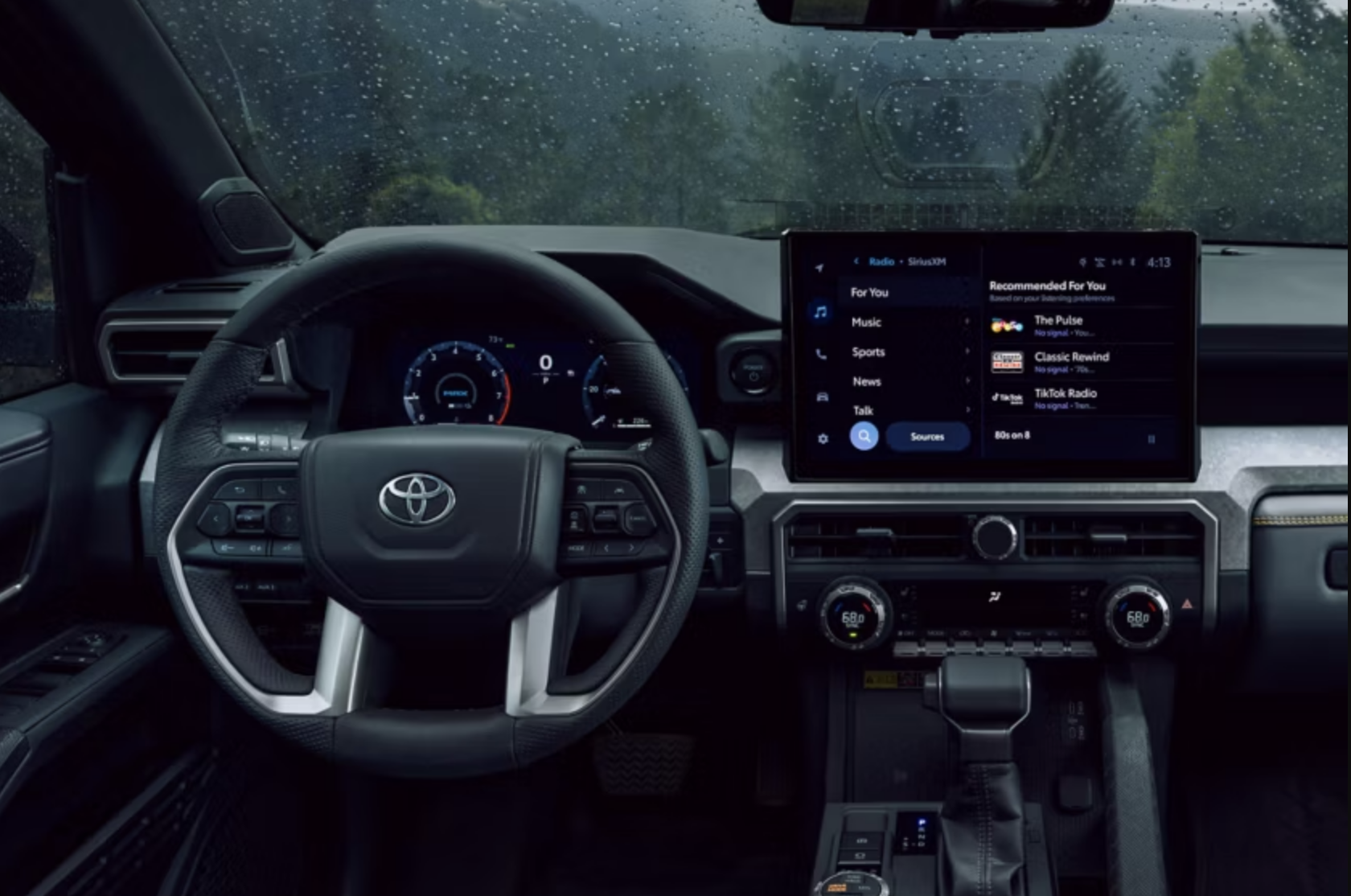
A common misconception is that rugged SUVs lag behind on technology. The 2026 Toyota 4Runner dispels that idea with modern Toyota Audio Multimedia technology, available larger displays, smartphone compatibility, and a range of convenience features.
The 4Runner offers an available 14-inch Toyota Audio Multimedia touchscreen, wireless Apple CarPlay and Android Auto compatibility, and available premium audio on select trims. Higher trims can add convenience features that help make daily driving feel easier and more refined.
The Bronco answers with Ford’s SYNC technology, wireless smartphone compatibility, and available upgraded audio, depending on trim and package. Both systems are capable, but the 4Runner’s higher trims deliver a strong out-of-the-box technology package for busy professionals and families.
Safety Systems Designed to Protect Families on City Streets and Backroads
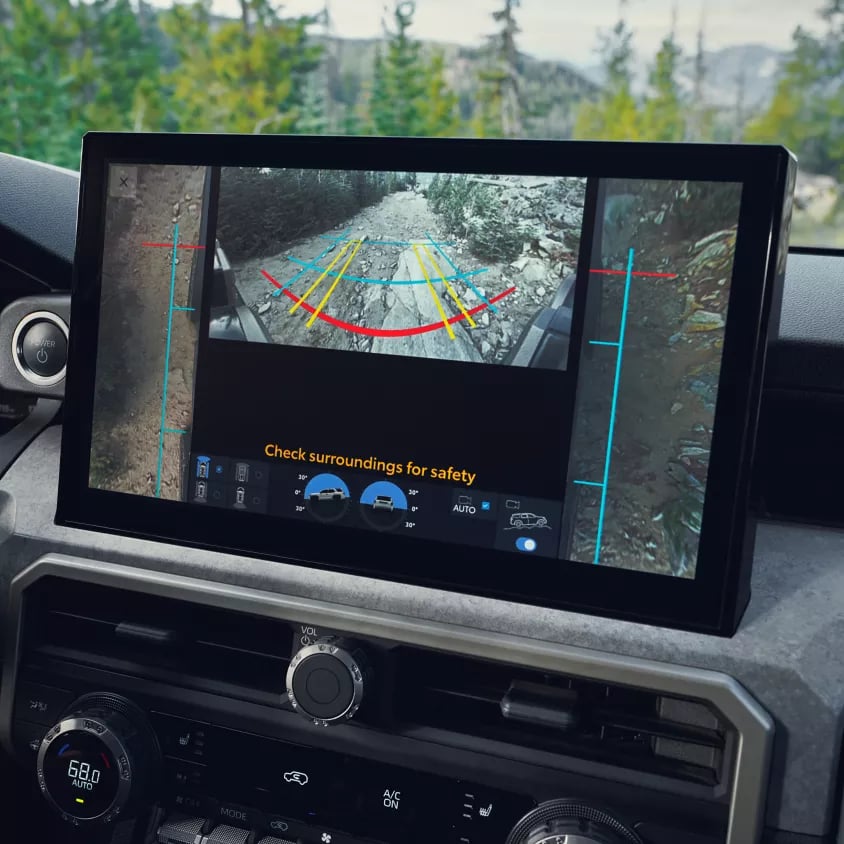
Every parent navigating school pickup lines, rural two-lane roads, and the occasional gravel path near the Duck River wants to know their vehicle is actively supporting driver awareness. Both the 4Runner and Bronco carry meaningful safety suites, but Toyota’s standard safety equipment is a key advantage.
The 2026 Toyota 4Runner comes equipped with Toyota Safety Sense 3.0, which includes driver-assistance features such as Pre-Collision System with Pedestrian Detection, Full-Speed Range Dynamic Radar Cruise Control, Lane Departure Alert with Steering Assist, Lane Tracing Assist, Road Sign Assist, Proactive Driving Assist, and Automatic High Beams.
The 2026 Ford Bronco includes important safety and stability technologies as well, with additional driver-assistance features available depending on trim and package. Because Bronco availability can vary by configuration, shoppers should confirm the exact feature list on the model they choose.
The 4Runner’s advantage is that its standard Toyota Safety Sense 3.0 suite gives families a strong baseline of driver-assistance technology without needing to navigate as many option packages.
Warranty, Maintenance, and Local Service Options
Long-term ownership costs are part of the real price of any vehicle, and Toyota’s ownership package creates a meaningful advantage.
The 2026 Toyota 4Runner is supported by Toyota’s 36-month/36,000-mile basic limited warranty and ToyotaCare, which includes no-cost factory scheduled maintenance for 2 years or 25,000 miles, whichever comes first, plus 24-hour roadside assistance for 2 years with unlimited mileage.
Ford also provides manufacturer warranty coverage on the 2026 Bronco, including 3-year/36,000-mile bumper-to-bumper coverage and 5-year/60,000-mile powertrain coverage, with roadside assistance also listed at 5 years/60,000 miles.
For Roberts Toyota customers, service support is close to home. You can book your next maintenance appointment directly with our team at 1027 Nashville Hwy in Columbia.
Pricing
Manufacturer-listed pricing varies by trim, destination charge, package, option, and inventory.
| 2026 Toyota 4Runner Trim | Base MSRP | 2026 Ford Bronco Trim | Pricing Note |
|---|---|---|---|
| SR5 | $42,070 | Base / Big Bend | Confirm current Ford MSRP, destination, and package pricing by configuration |
| Limited | $56,700 | Badlands | Confirm current Ford MSRP, destination, and package pricing by configuration |
| Platinum | $64,160 | Higher Bronco trims | Pricing varies widely by body style, powertrain, and equipment |
Which SUV Is the Better Overall Choice for Families in Middle Tennessee?
Which vehicle tows more — the 4Runner or the Bronco?
The 4Runner tows up to 6,000 lbs. when properly equipped. Most Bronco models tow up to 3,500 lbs., while Bronco Raptor can tow up to 4,500 lbs. If you're hauling a boat, camper, or loaded trailer to a Columbia-area lake or campsite, the 4Runner is the stronger choice.
Does the Bronco have better off-road hardware?
The Bronco offers serious trail-focused hardware and open-air adventure capability. The 4Runner counters with available four-wheel drive, rugged Toyota engineering, and strong daily drivability. Bronco is better for open-air trail enthusiasts, while the 4Runner is better for families balancing daily comfort with weekend adventure.
Which gets better fuel economy?
The 4Runner has a strong advantage on select configurations, with Toyota listing ratings such as 20 city / 24 highway MPG on certain trims. Bronco fuel economy varies widely by configuration and off-road equipment.
Is the 4Runner worth the higher price over the Bronco?
For families who need comfortable seating, strong enclosed cargo utility, 6,000-lb towing capability, standard Toyota Safety Sense 3.0, and ToyotaCare complimentary maintenance, the 4Runner’s value is strong across its trim range. The Bronco is a better fit for buyers whose top priority is open-air, trail-focused driving.
How do I take the next step?
Browse our current 4Runner inventory, get prequalified for financing, call (931) 388-3006, or visit Roberts Toyota at 1027 Nashville Hwy in Columbia.
© 2026 Roberts Toyota. All rights reserved.
Prices, MSRP, fuel economy estimates, feature availability, seating layouts, and safety ratings are for informational purposes only and may vary by trim, drivetrain, configuration, build date, inventory, and official manufacturer updates. MSRP excludes freight charges, tax, title, and license fees. See dealer for complete details and confirm any open campaigns, recalls, or required updates before purchase.