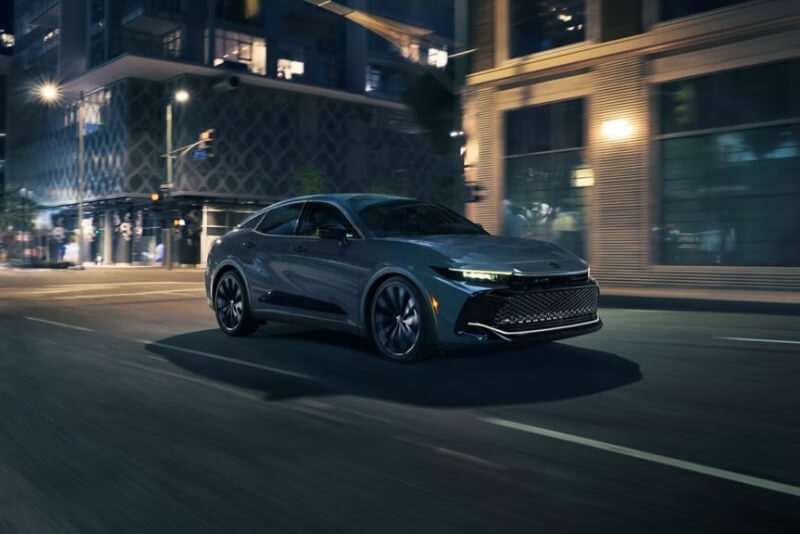
The 2027 Toyota Camry Hybrid is the best overall choice for long highway commutes, delivering an EPA-estimated 51 mpg combined on front-wheel-drive LE models alongside a refined 225-horsepower powertrain. Its extended wheelbase creates a smooth ride over highway expansion joints, while the insulated cabin keeps wind noise remarkably low at cruising speeds. Commuters who require additional cargo capacity or maximum fuel efficiency will find excellent alternatives in the 2027 Toyota Prius and 2027 Toyota RAV4 Hybrid.
Navigating the daily drive along I-65 requires a vehicle that balances fuel economy, passing power, and interior comfort. Distance driving places unique demands on a vehicle, where small differences in cabin acoustic dampening and seat support translate into noticeable daily comfort. The Toyota hybrid lineup uses the fifth-generation Toyota Hybrid System, pairing high-efficiency four-cylinder engines with electric motor generators for seamless power delivery during highway merges.
For drivers heading north each morning, choosing the right hybrid comes down to your personal priorities behind the wheel. The sedan profile of the Camry offers sedan handling and high-speed stability, making long stretches of highway feel effortless. Meanwhile, the hatchback layout of the Prius provides maximum fuel economy in an aerodynamic package, and the RAV4 Hybrid elevates the seating position for an expansive view of surrounding traffic.
At Roberts Toyota, our team helps commuters evaluate how each model fits their daily route, budget, and driving preferences. You can visit our Columbia showroom address to explore our complete lineup of hybrid vehicles, or give us a quick call to speak with a specialist about current availability and feature packages.
Is the Toyota Prius or Camry Hybrid Better for Daily I-65 Highway Commuting?
On the busy I-65 corridor, the 2027 Camry Hybrid’s longer wheelbase and enhanced sound insulation make it a standout choice for commuters seeking comfort and performance. While the Prius yields slightly higher city fuel economy numbers, the Camry Hybrid provides a more tranquil cabin environment and effortless high-speed acceleration that reduces driver fatigue during long daily trips.
Sustained highway travel highlights the structural differences between these two hybrid icons. The Camry Hybrid utilizes a 2.5-liter four-cylinder engine paired with electric motor generators, generating 225 horsepower in front-wheel-drive models and 232 horsepower when equipped with Electronic On-Demand All-Wheel Drive. This extra power gives the Camry distinct passing punch when overtaking slower traffic or accelerating up highway grade transitions. In comparison, the Prius uses a 2.0-liter four-cylinder engine producing 194 horsepower in front-wheel-drive configuration and 196 horsepower with all-wheel drive, which provides peppy city response but requires the engine to work harder during rapid highway passes.
Cabin acoustic comfort is another crucial factor for highway drivers. The Camry Hybrid features a wide stance and acoustic-laminated windshield glass on upper grades like the XLE and XSE, creating a serene oasis on the road that isolates passengers from tire rumble and pavement imperfections. On high-speed asphalt, the sedan stays grounded and planted. The Prius, while dramatically restyled with a sleek roofline and lower center of gravity, exhibits slightly more tire and wind noise at 70 mph due to its lighter overall curb weight and compact hatchback footprint.
Commuters who prioritize ride compliance and interior elbow room will appreciate the midsize proportions of the Camry. Passengers enjoy generous legroom and supportive seat cushioning that makes long trips effortless. However, buyers looking for lower entry price points or pre-owned options can also explore our pre-owned vehicle selection to compare earlier model years of both popular hybrids.
How Does the RAV4 Hybrid Compare to the Camry Hybrid for Practicality and Fuel Economy?
The 2027 Toyota Camry Hybrid outperforms the 2027 Toyota RAV4 Hybrid in highway fuel economy by roughly 11 mpg, but the RAV4 Hybrid offers superior driver seating height, standard all-wheel drive, and significantly easier gear loading. For commuters who strictly prioritize fuel savings, the Camry sedan is the better fit, whereas the RAV4 Hybrid caters to drivers needing crossover utility.
Fuel efficiency along open stretches of highway favors the streamlined aerodynamic profile of the Camry Hybrid. The Camry LE achieves up to an EPA-estimated 49 mpg highway and 51 mpg combined, whereas the RAV4 Hybrid achieves an EPA-estimated 38 mpg highway and 39 mpg combined. Over tens of thousands of annual commuter miles, that gap represents a tangible difference in yearly fuel expenses, giving the sedan a distinct cost-per-mile advantage.
| Feature / Spec | 2027 Toyota Camry Hybrid LE | 2027 Toyota RAV4 Hybrid LE |
|---|---|---|
| Powertrain | 2.5L 4-Cylinder Hybrid | 2.5L 4-Cylinder Hybrid |
| Horsepower (FWD / AWD) | 225 hp / 232 hp | 219 hp (AWD Standard) |
| EPA Highway MPG | 49 mpg highway | 38 mpg highway |
| EPA Combined MPG | 51 mpg combined | 39 mpg combined |
| Drivetrain | FWD Standard (AWD Available) | Electronic On-Demand AWD Standard |
| Rear Cargo Volume | 15 cubic feet | about 38 cubic feet |
Despite its lower fuel economy rating, the RAV4 Hybrid remains a favorite for regional daily driving. Its standard Electronic On-Demand All-Wheel Drive system uses a dedicated electric motor on the rear axle to instantly supply traction on wet roads without mechanical drag. Drivers in Spring Hill who navigate morning congestion along major suburban thoroughfares often favor the RAV4 Hybrid for its elevated seating position, which offers clearer sightlines over surrounding traffic.
Inside, the RAV4 Hybrid boasts a spacious cabin with soft-touch materials and high utility. Its upright roofline allows tall passengers to sit comfortably in both rows, making it an ideal vehicle for commuters who double as weekend carpool drivers or family haulers. Shoppers considering certified options can check our certified pre-owned inventory to find factory-backed Toyota models that offer hybrid efficiency at attractive price points.
Which Toyota Hybrid Offers the Best Cargo Capacity for Daily Equipment and Gear?
The 2027 Toyota RAV4 Hybrid offers the best cargo capacity in Toyota’s hybrid commuter lineup, featuring about 38 cubic feet of cargo space behind the second row and up to 69 cubic feet with the rear seats folded flat. The Prius hatch provides about 20 to 24 cubic feet depending on trim, while the Camry Hybrid sedan trunk offers 15 cubic feet of storage.
Cargo utility varies significantly based on vehicle body style. The RAV4 Hybrid features a wide rear opening, low liftover height, and a flat load floor that easily accommodates bulky gear, sales displays, toolboxes, or recreational equipment. Commuters who haul work samples or sports gear during the week find the crossover layout simplifies daily loading and unloading.
The Prius hatchback serves as a versatile middle ground between traditional sedans and compact crossovers. Its rear liftback design creates an elongated cargo floor capable of holding luggage, groceries, and folded equipment bags. While its sloping roofline limits vertical stacking space compared to an SUV, the wide hatch aperture makes it far easier to load large items than a standard sedan trunk.
The Camry Hybrid trunk is well-proportioned for a midsize sedan, easily swallowing several carry-on suitcases or golf bags. A standard 60/40 split-folding rear seat allows longer items to pass through into the main cabin when necessary. For residents in Mount Pleasant who travel into larger employment centers with work supplies or weekend outdoor gear, choosing between sedan trunk privacy and crossover cargo volume is a key purchase consideration. Drivers ready to upgrade can evaluate your trade-in value online to see how their current vehicle can offset the purchase of a new hybrid.
What Is the Starting Price Across the Toyota Hybrid Commuter Lineup?
The starting price for Toyota hybrid commuter models ranges from $25,175 for the compact 2027 Corolla Hybrid LE up to $32,850 for the standard all-wheel-drive 2027 RAV4 Hybrid. The 2027 Toyota Prius starts at $28,350, while the 2027 Toyota Camry Hybrid starts at $28,400 for the well-equipped LE trim.
Each model in the lineup represents a strong value proposition tailored to different commuter budgets and driving habits. The Corolla Hybrid stands as the entry point, offering an EPA-estimated 50 mpg combined and available all-wheel drive at an accessible price. Moving up to the Prius or Camry Hybrid introduces higher system horsepower, expanded cabin dimensions, and enhanced sound insulation packages.
- 2027 Toyota Corolla Hybrid LE: Base MSRP starting at $25,175, delivering 50 mpg combined with available electronic all-wheel drive.
- 2027 Toyota Prius LE: Base MSRP starting at $28,350, offering up to 57 mpg city / 56 mpg highway in a sleek hatchback design.
- 2027 Toyota Camry Hybrid LE: Base MSRP starting at $28,400, providing 225 horsepower and 51 mpg combined in a midsize sedan.
- 2027 Toyota RAV4 Hybrid LE: Base MSRP starting at $32,850, featuring standard all-wheel drive and about 38 cubic feet of cargo room.
Financing a new hybrid model allows drivers to balance initial transaction costs against long-term fuel savings. With low operating costs per mile, high resale value, and comprehensive warranty coverage—including an 8-year/ 100,000-mile hybrid component warranty and a 10-year/ 150,000-mile hybrid battery warranty—a Toyota hybrid provides long-term financial peace of mind.
Commuters who come in for a first look usually want to compare trunk space and rear legroom side-by-side on the showroom floor before taking a test drive on the highway. To explore current stock and explore current financing options, shoppers can browse our current new Toyota inventory or submit a financing application through our finance department.
Frequently Asked Questions About Choosing a Toyota Hybrid for the Columbia to Franklin Commute
Q: Does the 2027 Toyota Camry Hybrid offer all-wheel drive for winter commuting?
Yes, the 2027 Toyota Camry Hybrid offers available Electronic On-Demand All-Wheel Drive across all trim levels, including the LE, SE, XLE, and XSE. The system uses a dedicated electric motor on the rear wheels that engages automatically when sensors detect front tire slippage on rain-slicked roads or icy highway overpasses, increasing total powertrain output to 232 horsepower while maintaining an impressive EPA-estimated 50 mpg combined on LE AWD models.
Q: What is the total highway driving range of the 2027 Toyota Prius on a single tank of gas?
The 2027 Toyota Prius LE front-wheel-drive model has an 11.3-gallon fuel tank and an EPA highway rating of 56 mpg highway, giving it a theoretical maximum highway cruising range exceeding 600 miles per tank. Real-world highway range typically spans between 500 and 550 miles under normal driving conditions, allowing most commuters to complete a full week of driving between fuel stops.
Q: Are advanced driver-assist and safety features standard on these Toyota hybrid models?
Yes, every 2027 Toyota hybrid model comes standard with the Toyota Safety Sense 3.0 suite. This driver-assist package includes Pre-Collision System with Pedestrian Detection, Full-Speed Range Dynamic Radar Cruise Control, Lane Departure Alert with Steering Assist, Lane Tracing Assist, Road Sign Assist, and Proactive Driving Assist. Features like Blind Spot Monitor with Rear Cross-Traffic Alert are also standard on most trims to assist during high-speed highway lane changes.
Q: What is the difference in cabin noise between the Prius and the Camry at 70 mph?
The Camry Hybrid maintains a noticeably quieter cabin at 70 mph due to its longer 111-inch wheelbase, thicker acoustic insulation, and acoustic-laminated front side glass on XLE and XSE trims. While the Prius is refined for a compact hatchback, its body shape and lighter sound-deadening materials allow slightly more road impact noise and wind sound to penetrate the cabin during high-speed highway travel.
Q: What warranty coverage comes standard on a new Toyota hybrid purchased at Roberts Toyota?
Every new Toyota hybrid includes a 3-year/ 36,000-mile bumper-to-bumper limited warranty, a 5-year/ 60,000-mile powertrain warranty, and ToyotaCare complimentary factory scheduled maintenance for 2 years or 25,000 miles. Additionally, hybrid-related components are covered for 8 years or 100,000 miles, while the hybrid battery is protected by a 10-year/ 150,000-mile factory warranty.
Vehicle information, pricing, features, specifications, fuel economy, safety ratings, availability, and comparisons are provided for informational purposes only and may vary by model year, trim level, package, drivetrain, and manufacturer updates. MSRP excludes taxes, title, license, registration, dealer fees, destination charges, and optional equipment unless otherwise stated. Fuel economy estimates are based on EPA ratings where available, and actual mileage will vary. Feature availability and safety technologies may differ by trim and configuration.