You should check your tire pressure at least once a month during cold weather, as well as on any morning following a sharp drop in outside temperature or prior to heading out on a long trip. Always measure inflation when tires are cold—meaning the vehicle has sat parked for at least three hours—to obtain an accurate baseline against your vehicle's door-jamb specification placard.
As autumn brings cooler air across Middle Tennessee, routine tire maintenance becomes one of the most critical steps in preserving vehicle safety and efficiency. For drivers operating near the Duck River or navigating the rolling terrain of Columbia, sudden overnight temperature shifts directly alter tire inflation. Checking pressure when tires are cold prevents false readings caused by internal friction heat, which naturally raises internal pressure after driving just a few miles.
Establishing a consistent habit of checking tire inflation protects your tires from invisible wear. When tires run underinflated during autumn, the outer shoulders absorb excessive road contact, resulting in accelerated tread wear, reduced fuel efficiency, and compromised steering response. Conversely, overinflated tires wear rapidly along the center strip, leading to a harsher ride and reduced road contact.
Checking your tires takes only a few minutes with a digital or pencil-style pressure gauge. Remove the valve stem cap, press the gauge firmly onto the valve stem until the hissing sound stops, and compare the reading to the specification listed on the driver-side door jamb. If you need assistance with proper inflation or a complete tire check, stop by our Columbia service center or give our team a quick call to speak with our certified technicians.
How Do Temperature Drops and Cold Autumn Mornings Affect TPMS and Pressure?
Air contracts as ambient temperatures decrease, dropping tire pressure by roughly 1 to 2 PSI for every 10-degree Fahrenheit drop in outside temperature. This contraction reduces internal air volume overnight, frequently causing your dashboard Tire Pressure Monitoring System warning light to illuminate on crisp autumn mornings.
Understanding the relationship between temperature and air pressure helps eliminate confusion when autumn arrives. During warm summer months, ambient heat expands the air inside your tires. As seasonal temperatures drop, those same air molecules condense, occupying less volume within the tire cavity without any air actually escaping through a leak or puncture. A 20-degree drop between late afternoon and early morning can easily reduce cold pressure by 2 to 4 PSI, which is often enough to trigger the warning light on your instrument cluster.
Our service advisors notice that drivers often ask why the dashboard warning light turns off after 15 minutes of highway driving. As tires roll down the road, internal friction generates heat that expands the air, temporarily raising pressure above the illumination threshold. However, relying on operational heat to turn off the light leaves your tires running underinflated during the initial miles of your commute, when traction and handling matter most.
To maintain optimal pressure, always refer to the vehicle specification placard affixed to the driver-side door frame (B-pillar) or detailed in your owner's manual. Never inflate tires to the maximum pressure stamped on the tire sidewall. That sidewall figure indicates the maximum pressure the tire structural housing can hold under maximum load weight, not the vehicle manufacturer's engineered cold inflation recommendation designed for balanced handling and ride comfort.
What Is the Minimum Safe Tire Tread Depth for Wet Fall Roads and Slick Leaves?
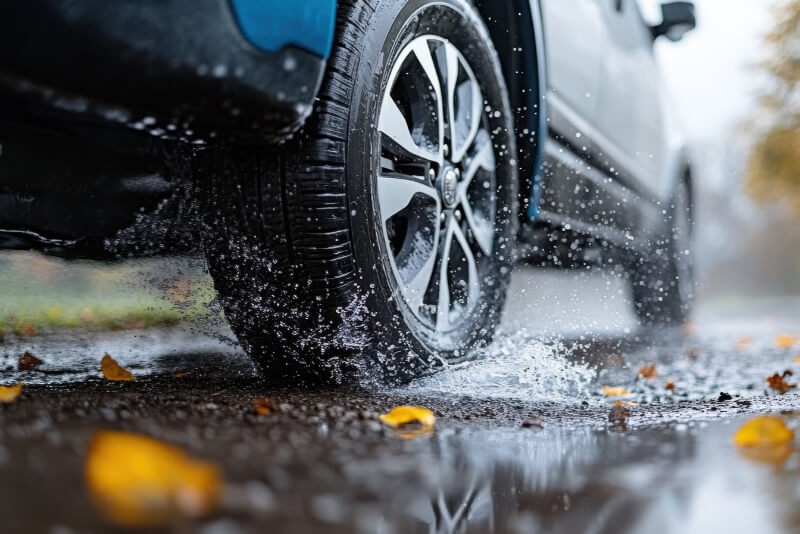
Although 2/32 of an inch is the legal minimum tread depth across most highways, a depth of at least 4/32 of an inch is necessary for safe stopping power and hydroplaning resistance on rain-soaked fall roads. Wet leaves resting on asphalt create a barrier as slippery as packed snow, demanding sufficient tread depth to channel away water and leaf debris.
Autumn rain combined with falling leaves presents unique hazards on regional roads. When wet leaves blanket the pavement, they release natural oils and trap water underneath, forming a slick film that severely reduces tire traction. Vehicles with worn tread cannot slice through this slippery layer to reach solid asphalt, dramatically extending stopping distances and increasing the risk of sliding during routine braking or cornering.
Tire design plays a direct role in maintaining wet-weather grip. Premium all-season tires feature engineered tread patterns built specifically to clear surface water:
- Circumferential Grooves: Wide, deep channels running continuously around the circumference of the tire that collect and evacuate bulk water from beneath the contact patch.
- Lateral Sipes: Small, high-density slits cut into the rubber tread blocks that act like flexible biting edges, cutting through water film and wet leaf debris to establish road contact.
- Tread Block Void Ratios: Strategically spaced voids that allow slush, water, and debris to pump away laterally as the wheel rotates.
Commuters travelling along Interstate 65 near Spring Hill encounter standing water during heavy autumn downpours, making proper tread depth essential. Checking your tread depth takes seconds using a standard U.S. coin. Place a quarter head-first into the primary tread groove; if the top of George Washington's head remains exposed, your tread has worn below 4/32 of an inch, indicating it is time to plan for replacement tires. While checking with a penny verifies the legal 2/32 of an inch limit, waiting until that point leaves your vehicle vulnerable to hydroplaning in autumn conditions.
Vehicles equipped with All-wheel drive, such as the 2026 Toyota RAV4 or the 2026 Toyota Highlander, rely on healthy tread to deliver their full safety potential. Advanced electronic traction management systems send power to the wheels with the most grip, but even sophisticated drive systems cannot generate traction if worn rubber loses physical contact with wet pavement.
How Does Periodic Tire Rotation Prevent Uneven Wear and Extend Tread Life?
Rotating your tires every 5,000 to 7,500 miles ensures that tread wears evenly across all four positions by balancing the distinct cornering and steering stresses placed on the front wheels against the trailing load on the rear axle. Skipping periodic rotations causes irregular wear patterns that prematurely shorten tire lifespan and compromise road grip.
On front-wheel drive and all-wheel drive vehicles, the front tires perform multiple heavy tasks simultaneously: steering, applying stopping power during braking, and transferring engine torque to the road. This concentrated workload causes front tires to wear down significantly faster than rear tires, particularly along the outer rubber shoulders. Swapping tires between front and rear axles distributes physical wear evenly, extending overall set longevity and protecting your tire investment.
Recognizing early symptoms of irregular tire wear allows you to correct alignment or suspension issues before ruining a set of tires:
- Feathering: Tread blocks develop sharp edges on one side and smooth edges on the other, usually caused by improper toe alignment settings.
- Edge Wear: Accelerated wear appearing on both outer shoulders indicates chronic underinflation, while wear isolated to a single shoulder signals camber misalignment.
- Cupping or Scalloping: Diagonal, scoop-like dips carved across the tread surface point to worn shock absorbers, struts, or unbalanced wheel assemblies.
- Steering Wheel Vibration: Persistent fluttering felt through the steering wheel at highway speeds often indicates an out-of-balance tire or irregular tread flat-spotting.
For hardworking trucks like the 2026 Toyota Tacoma, maintaining a consistent rotation schedule is especially vital. Trucks carrying bed loads or towing trailers exert changing weight dynamics across the axles, which can accelerate rear tread wear during heavy-duty tasks or cause front tread cupping if maintenance is deferred.
What Key Maintenance Items Belong on a Fall Vehicle Safety Inspection Checklist?
A comprehensive fall safety inspection should evaluate tire tread and cold pressure, brake pad thickness, battery charge capacity, windshield wiper condition, winter-grade washer fluid level, and all exterior safety lighting. Routine seasonal checks prevent minor wear items from turning into unexpected roadside issues during cold weather.
Preparing your vehicle for changing autumn conditions requires a methodical approach to routine service. While tire health forms the foundation of road safety, surrounding mechanical systems work together to ensure complete control on damp, dark autumn evenings:
- Tires and Spare: Check cold inflation pressure across all four ground tires and the spare tire. Inspect tread depth across inner, center, and outer grooves while scanning sidewalls for bulges, cracks, or embedded road debris.
- Brake System: Inspect front and rear brake pad thickness, rotor surfaces for heat scoring, and brake fluid moisture content. Autumn moisture requires responsive stopping power without pedal fade or anti-lock brake chatter.
- Battery and Charging Output: Cold mornings demand higher cranking amps to turn over cold engine oil. Testing battery reserve capacity and alternator output prevents unexpected no-start situations on chilly mornings.
- Wiper Blades and Washer Fluid: Replace streaking or torn wiper blades with fresh rubber elements. Top off the washer fluid reservoir with a winter-grade solution formulated to melt frost and clean road grime.
- Lighting and Defrosters: Verify proper operation of headlights, high beams, brake lights, turn signals, and rear defroster grids to ensure visibility through fog and early twilight.
Addressing these foundational maintenance points restores driver confidence and ensures your vehicle remains a serene oasis on the road throughout the fall season. You can easily schedule your fall vehicle safety inspection with our factory-trained service technicians to ensure every system on your vehicle is fully prepared for cooler weather.
Common Questions About Autumn Tire Care
Q: How do I know if my tire pressure warning light means a flat tire or just cold weather?
If the warning light stays solidly illuminated upon starting your vehicle on a chilly morning, it typically indicates a uniform pressure drop caused by low ambient temperatures across one or more tires. However, if the light flashes for approximately 60 seconds before remaining solid, or if you notice severe vehicle pulling and heavy steering, it signals a TPMS system fault or a rapid pressure leak. Always stop in a safe location and measure all four cold pressures with a gauge to confirm.
Q: Is the tire pressure listed on my tire sidewall the recommended setting for daily driving?
No, the PSI number molded onto the tire sidewall represents the maximum inflation pressure the tire structural housing can hold under its maximum rated weight load. Operating your tires at this maximum number results in a harsh ride, reduced traction, and accelerated center tread wear. Always follow the recommended cold inflation PSI located on the driver-side door jamb placard or detailed inside your owner's manual.
Q: Why are wet leaves on the road considered as dangerous as ice?
Wet leaves release organic oils and trap a thin film of water against the pavement, creating a slick physical barrier that prevents tire rubber from touching the road surface. This barrier drastically reduces the coefficient of friction, extending stopping distances and increasing the likelihood of skidding during turns. Drivers should slow down, avoid abrupt steering adjustments, and double their following distance when travelling over leaf-covered roads.
Q: Can I adjust my tire pressure when the tires are warm from driving?
Driving generates internal friction that heats the air inside your tires, temporarily raising measured pressure by 3 to 5 PSI. If you must add air to warm tires at a service station, inflate them roughly 3 PSI above the door jamb specification. Be sure to re-check the pressure the following morning when the tires are cold to confirm baseline inflation matches manufacturer recommendations.
Q: Does all-wheel drive replace the need for healthy tire tread on wet autumn roads?
All-wheel drive distributes engine power to the wheels with the most traction, but it cannot generate road grip if worn rubber loses contact with the pavement. Advanced drive systems depend entirely on deep tread grooves and siping to evacuate water and cut through road film. Without at least 4/32 of an inch of tread depth, an all-wheel drive vehicle can hydroplane or skid on wet roads just as easily as a two-wheel drive vehicle.
If you have additional questions regarding seasonal tire choices or need help checking your tread depth, visit our Columbia location or speak directly with our service desk at (931) 388-3006.