The 2027 Toyota Grand Highlander is expected to offer the highest overall cargo volume in the Toyota crossover lineup, providing about 21 cubic feet behind the third row and nearly 98 cubic feet of total cargo room with all rear seats folded flat. The standard Highlander offers up to 84 cubic feet, the RAV4 delivers about 70 cubic feet, and the Corolla Cross provides up to 47 cubic feet of maximum capacity.
Comparing vehicle dimensions is one of the most practical steps when choosing a new crossover. Every driver brings different hauling demands to the table, whether that involves packing heavy camping gear for weekend fishing trips along the Duck River near Mount Pleasant or arranging luggage for a multi-state road trip. Toyota designs its lineup across distinct size categories to ensure there is a clear match for every family size and storage requirement.
When evaluating overall volume, maximum storage numbers tell only part of the story. The height of the rear liftgate opening, floor depth, wheel well intrusions, and how smoothly the seats fold down all dictate real-world usability. The compact Corolla Cross serves single drivers and smaller households looking for quick urban maneuverability paired with hatchback convenience. Upgrading to the RAV4 increases cargo width and depth substantially, making it a favorite for active lifestyles.
For larger families requiring versatile seating alongside generous utility, the three-row models expand capabilities dramatically. The standard Highlander manages daily sports equipment and grocery runs with ease while preserving manageable exterior proportions. Meanwhile, the Grand Highlander maximizes space in every dimension, granting extended cargo length even when all seven or eight seating positions are occupied.
To explore these options in person, you can easily find our showroom location in Columbia or get in touch by reaching out directly to (931) 388-3006 to discuss current availability.
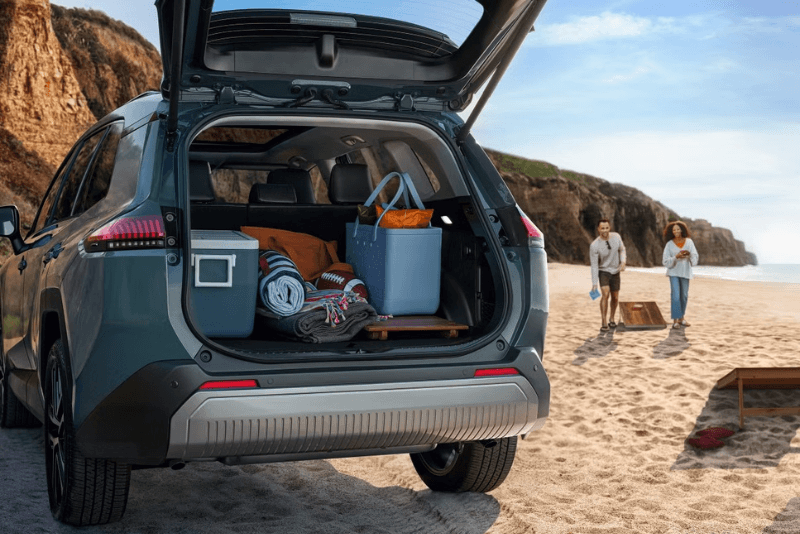
How Does Cargo Space Behind the Rear Seats Compare Across the Toyota Lineup?
When all passenger seats are upright, the Toyota RAV4 leads two-row models with up to 38 cubic feet of rear cargo space, while the Grand Highlander provides 21 cubic feet behind its third row and 58 cubic feet behind its second row.
Rear seat cargo capacity measures the storage available during standard travel when every seat is occupied by passengers. In two-row models, this space dictates how many suitcases, strollers, or groceries fit behind the second row without obscuring rear sightlines. The Corolla Cross provides roughly 24 cubic feet of rear volume in front-wheel drive configurations and about 19 cubic feet in models equipped with all-wheel drive, offering plenty of space for routine daily tasks.
Stepping up to the RAV4 adds significant depth and height. With about 38 cubic feet available behind the second row, the RAV4 easily accommodates several full-sized bags alongside gear bags or pet kennels. This balanced footprint makes it one of the most versatile compact SUVs on the market for drivers who rarely need a third row but constantly carry equipment.
Three-row SUVs introduce a secondary cargo metric: volume behind the third row versus volume behind the second row with the back row folded down.
- Corolla Cross: Up to 24 cubic feet behind the 2nd row (FWD trims).
- RAV4: About 38 cubic feet behind the 2nd row.
- Highlander: Approximately 16 cubic feet behind the 3rd row; expands to 48 cubic feet behind the 2nd row.
- Grand Highlander: About 21 cubic feet behind the 3rd row; expands to 58 cubic feet behind the 2nd row.
The standard Highlander delivers 16 cubic feet behind its third row, which works well for backpack drop-offs, grocery bags, or small carry-on suitcases. Folding that third row down opens up 48 cubic feet behind the second row. The Grand Highlander raises the bar by providing 21 cubic feet behind the third row, meaning you can carry luggage for a full house without tucking bags around passengers' feet.
If you are evaluating these dimensions for your daily driving needs, feel free to browse our inventory of new Toyota SUVs or check out our pre-owned vehicle selection online to see how different model years compare.
How Much Maximum Cargo Space Do Toyota SUVs Offer With Seats Folded?
With rear seats folded flat, maximum cargo space scales directly by vehicle class: the Grand Highlander reaches up to 98 cubic feet, the Highlander provides up to 84 cubic feet, the RAV4 yields up to 70 cubic feet, and the Corolla Cross maxes out at roughly 47 cubic feet.
Folding the rear seating rows transforms your SUV into an expansive load floor capable of transporting furniture, large home improvement materials, or bulky recreational equipment. Toyota equips each model with easy-release seat latches—including standard 60/40 split-fold seats—that fold down quickly without requiring specialized tools or complex maneuvers.
The subcompact Corolla Cross offers up to 47 cubic feet when the second row is stowed. While compact on the outside, its wide rear hatch cutout allows owners to load flat-packed boxes or bicycles with the front wheel removed. The RAV4 elevates maximum capacity to approximately 70 cubic feet, providing a flat surface that comfortably accommodates camping gear, oversized luggage, or sports equipment.
For serious utility, three-row models deliver van-like volume while maintaining crossover driving dynamics.
- Corolla Cross: Up to 47 cubic feet maximum capacity.
- RAV4: Approximately 70 cubic feet maximum capacity.
- Highlander: Up to 84 cubic feet maximum capacity.
- Grand Highlander: Up to 98 cubic feet maximum capacity.
The Highlander yields up to 84 cubic feet when both the second and third rows are folded down flat. This expansive floor makes hauling home goods or full sets of luggage effortless. The Grand Highlander pushes maximum capacity to nearly 98 cubic feet, creating a broad, deep cargo cavern that easily handles extended road trip cargo or large household moves.
To see these versatile seat-folding mechanisms in action, take a look through our certified pre-owned Toyota inventory to find fully inspected crossovers ready for heavy hauling.
Does the Grand Highlander Provide Significantly More Space Than the Highlander for Family Road Trips?
The Grand Highlander expands total cargo capacity by about 13 cubic feet over the standard Highlander and adds nearly 5 cubic feet of extra space directly behind the third row, making a noticeable difference when packing luggage for extended family trips.
Families comparing three-row crossovers frequently weigh the differences between the established Highlander and the roomier Grand Highlander. While both models deliver incredible comfort and family versatility, their internal volume allocations serve distinct road-trip styles. The standard Highlander features a total interior cargo volume of up to 84 cubic feet, offering a nimble footprint that fits easily into garage spaces while catering to active households.
Families test-driving three-row crossovers at our lot usually ask whether luggage for a week-long vacation will fit behind the third row before they ask about infotainment options. In the standard Highlander, the 16 cubic feet behind the back row handles daily grocery runs or weekend sports equipment, but packing for a week-long journey with six or seven passengers often requires using a roof carrier or rear hitch basket.
The Grand Highlander solves this pinch point by extending the body length and boxiness. With 21 cubic feet available behind the third row, parents can fit several full-sized roller suitcases vertically or stack cargo bags without blocking rear view visibility. On busy weekend mornings in Spring Hill, carrying youth sports gear alongside extra folding chairs and coolers is effortless in the Grand Highlander.
When you fold both rear rows flat, the Grand Highlander reveals nearly 98 cubic feet of maximum volume compared to the Highlander's 84 cubic feet. The extra interior width and legroom also benefit passenger comfort. If you are considering an upgrade to a larger family crossover, you can value your current vehicle trade-in online to estimate your purchasing power before visiting our showroom.
How Practical Is Corolla Cross Cargo Space Compared to Larger Toyota Crossovers?
The Corolla Cross offers roughly 24 cubic feet of rear cargo area in front-wheel drive configurations and up to 19 cubic feet in all-wheel drive trims, delivering remarkable efficiency for daily errands while scaling up to 47 cubic feet for weekend getaways.
Shoppers considering a crossover often debate whether a subcompact option like the Corolla Cross provides enough real-world room or if upgrading to the compact RAV4 is necessary. While the RAV4 provides about 38 cubic feet behind its second row, the Corolla Cross makes remarkably clever use of its footprint. Its lower cargo floor height reduces lifting effort when loading heavy groceries or luggage.
In daily driving scenarios, the Corolla Cross handles routine tasks effortlessly. The wide liftgate opening accommodates luggage, strollers, and golf bags without awkward angling. Front-wheel drive models provide up to 24 cubic feet behind the rear seats, while models with all-wheel drive trade a small amount of under-floor storage depth for rear-drivetrain components, leaving roughly 19 cubic feet of usable space.
- Corolla Cross FWD: Roughly 24 cubic feet behind the second row.
- Corolla Cross AWD: About 19 cubic feet behind the second row.
- RAV4 (All Trims): Approximately 38 cubic feet behind the second row.
For single drivers, young couples, or commuters prioritizing high fuel economy alongside functional storage, the Corolla Cross strikes an ideal balance. When extra volume is needed, folding down the rear seating row opens up 47 cubic feet of load space.
If you want to explore affordable payment options for a versatile subcompact crossover, you can prequalify for financing online in just a few simple steps.
How Do Passenger Seating Capacity, Legroom, and Cargo Area Durability Compare Across Toyota SUVs?
The Corolla Cross and RAV4 seat up to five passengers across two rows, whereas the Highlander and Grand Highlander accommodate seven to eight passengers across three rows, with the Grand Highlander boasting 34 inches of third-row legroom alongside hard-wearing, stain-resistant cargo interior materials.
Passenger comfort goes hand-in-hand with cargo functionality. A crossover must balance rear legroom with luggage space so passengers can stretch out without forcing bags into the seating area. The Corolla Cross and RAV4 provide spacious two-row seating for five adults, offering generous rear legroom and head clearance that keeps the ride relaxed.
In three-row models, passenger accommodation varies noticeably in the third row:
- Corolla Cross: 5 passengers across 2 rows; compact cargo floor.
- RAV4: 5 passengers across 2 rows; wide cargo deck.
- Highlander: 7 to 8 passengers across 3 rows; 28 inches of third-row legroom.
- Grand Highlander: 7 to 8 passengers across 3 rows; 34 inches of third-row legroom.
The standard Highlander offers 28 inches of third-row legroom, which works great for children or shorter trips across town. The Grand Highlander expands third-row legroom to 34 inches, allowing adults to ride comfortably in the back row even on extended highway trips. Trims like the XLE, Limited, and Platinum elevate cabin ambiance with supple leather seating, transforming the spacious cabin into a serene oasis on the road.
Beyond capacity, Toyota builds its cargo areas to withstand years of active family use. Durable synthetic carpet liners, heavy-duty floor backings, and available all-weather cargo trays resist scuffs, dirt, and spills from muddy boots or wet sports equipment. Solid seat-hinge construction ensures that folding the rows back and forth hundreds of times over years of ownership remains smooth and reliable.
To experience the seating comfort and cargo layouts for yourself, visit our Columbia dealership address or consider calling our staff directly to arrange a full vehicle walk-around.
Frequently Asked Questions About Toyota SUV Cargo Space
How many suitcases can fit behind the third row of the Grand Highlander compared to the Highlander?
At Roberts Toyota, customers often ask how much cargo space the Grand Highlander offers behind the third row, which is approximately 21 cubic feet. The standard Highlander offers 16 cubic feet behind its third row, which typically accommodates two to three carry-on bags or a couple of duffel bags before reaching window height.
Does opting for all-wheel drive reduce the cargo space in the Corolla Cross?
All-wheel drive models of the Corolla Cross offer roughly 19 cubic feet of cargo space behind the second row compared to about 24 cubic feet in front-wheel drive versions. The slight reduction occurs under the rear cargo floor to accommodate the rear drive assembly, though total usable height above the floor remains virtually identical.
How easily do the rear seats fold down to create a flat loading surface in the RAV4?
The rear seats in the RAV4 fold down quickly using simple release levers located on the seatbacks. The 60/40 split-fold seats drop forward nearly flat with the cargo floor, creating a continuous surface that makes sliding heavy or long items into the vehicle simple.
Can a standard full-size stroller fit in the cargo area of a two-row RAV4 alongside grocery bags?
A standard full-size stroller fits flat inside the RAV4 cargo area with ample space remaining. With nearly 38 cubic feet available behind the second row, you can place a folded stroller along one side of the trunk and still have plenty of room for several large grocery bags or luggage pieces.
What accessories help protect Toyota cargo area flooring during heavy hauling?
Toyota offers custom-fit all-weather cargo mats and heavy-duty rubber cargo trays designed specifically for each SUV model. These accessories feature raised edges to trap dirt, mud, and liquid spills, protecting the factory carpeting underneath while making cleanup as easy as spraying off the mat with a hose.
Prices and MSRP referenced in this article are estimates for informational purposes only and do not constitute an offer to sell. See dealer for complete details. *Fuel economy estimates shown may differ from official EPA ratings and should not be relied upon as a guarantee of actual vehicle performance.