The 2026 Toyota Prius Electronic On-Demand AWD system works by using an independent rear electric motor to drive the rear wheels without a heavy physical driveshaft. When onboard sensors detect front-wheel slippage or strong acceleration, the vehicle control unit instantly routes electrical power from the hybrid battery to the rear electric motor, delivering immediate rear-wheel torque and then shifting back to front-wheel drive during steady highway cruising to preserve fuel efficiency.
Unlike traditional all-wheel-drive configurations that rely on mechanical linkages, transfer cases, and prop shafts, this electronic setup operates entirely through high-voltage wiring and precise electronic control modules. Power from the front 2.0L four-cylinder engine and primary electric motor flows to the front wheels through a planetary-gear eCVT. When extra traction is needed, the system energizes the rear electric motor instantly. Drivers experience smooth, uninterrupted power delivery on slippery pavement while enjoying a serene oasis on the road during daily travel.
Columbia's mixed urban traffic and wet morning commutes along the Duck River basin require prompt traction without compromising fuel economy. Commuters visiting our dealership often ask whether the system operates continuously or only when traction drops; our team shows them how the digital torque-distribution display on the dashboard highlights instant power transfer the moment wet pavement is encountered. To experience how this system responds on local roads, drivers can drop by our Columbia showroom location or give our sales team a call directly at (931) 388-3006 to test drive a model today.
Why Does the Toyota Prius Use Electronic On-Demand AWD Instead of a Traditional Mechanical AWD System?
Toyota equips the 2026 Toyota Prius with Electronic On-Demand AWD instead of a traditional mechanical all-wheel-drive system to eliminate heavy drivetrain components, lower internal friction, and preserve maximum fuel economy. Removing the driveshaft and mechanical differential reduces curb weight significantly, allowing the vehicle to deliver all-weather capability while maintaining exceptional efficiency figures across every trim level.
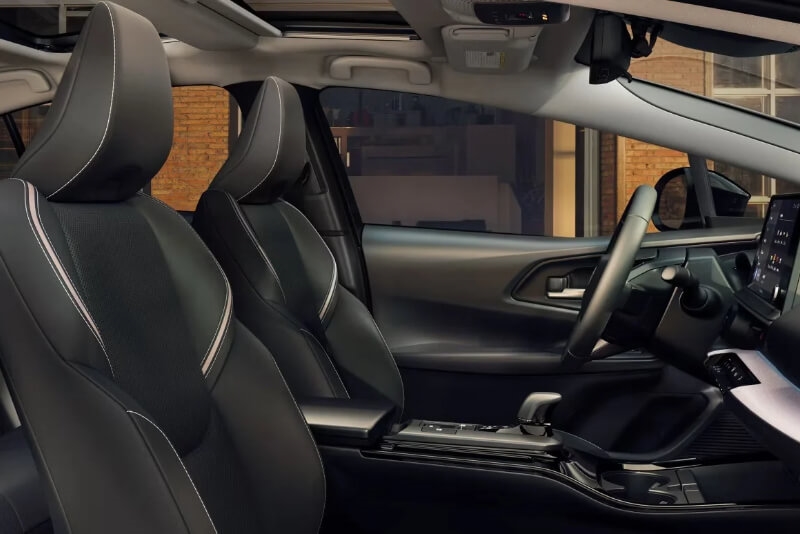
A mechanical system introduces continuous rotational drag, which pulls down gas mileage even when extra traction is not needed. By replacing mechanical links with a compact rear electric motor, the hybrid powertrain delivers 196 hp on all-wheel-drive models, compared to 194 hp on front-wheel-drive editions, all while generating 120 lb-ft of engine torque through an efficient CVT. Inside the cabin, removing the central driveshaft hump frees up floor space, helping maintain a spacious cabin with available supple leather seating feel through SofTex upholstery for all five passengers.
Selecting an all-wheel-drive hybrid should not mean sacrificing efficiency or interior room. Every grade in the lineup balances performance and economy:
- LE AWD: 196 hp, CVT, paired with 53 mpg city / 54 mpg highway fuel efficiency.
- LE FWD: 194 hp, CVT, offering 57 mpg city / 56 mpg highway.
- XLE AWD: 196 hp, CVT, with 19-inch alloy wheels and premium interior features.
- XLE FWD: 194 hp, CVT, delivering 52 mpg city / 52 mpg highway.
- Nightshade AWD: 196 hp, CVT, featuring dark exterior trim accents and black 19-inch wheels.
- Nightshade FWD: 194 hp, CVT, combining stealthy styling with front-wheel-drive efficiency.
- Limited AWD: 196 hp, CVT, equipped with a 12.3-inch multimedia display and JBL audio.
- Limited FWD: 194 hp, CVT, providing top-tier comfort and front-wheel drive.
Shoppers interested in exploring these grades can view our current new Toyota Prius inventory online to compare available features and trim options before taking a test drive.
How Does the Rear Electric Motor Operate and Engage When Wheel Slip Is Detected?
The dedicated rear electric motor in the 2026 Toyota Prius operates independently from the front powertrain, drawing energy directly from the hybrid battery pack whenever system sensors detect wheel slip. When the front tires lose grip on wet or icy roads, the hybrid electronic control unit commands the rear motor to engage, instantly sending electric torque to the rear wheels to stabilize the vehicle.
Engagement relies on continuous data feeds from multiple onboard vehicle sensors. Wheel speed sensors monitor the rotational speed of all four tires, while throttle position, steering angle, and G-force sensors evaluate vehicle acceleration and cornering dynamics. If the control unit senses front wheel spin during a rapid launch or detects chassis lateral slip around a slick bend, electric current energizes the magnet motor at the rear axle in milliseconds.
Because the electric motor delivers instant torque without waiting for a mechanical clutch pack to engage, power application is virtually instantaneous. Once vehicle momentum stabilizes and traction returns, the control system tapers off electrical current to the rear motor, returning the car to front-wheel drive seamlessly without any physical gear clunking or shift delay. Drivers searching for efficient, all-weather capability can also browse our selection of pre-owned vehicle options to compare hybrid generations and drivetrain designs.
At What Speeds Does Toyota Prius Electronic On-Demand AWD Operate and How Does It Affect Handling?
The Electronic On-Demand AWD system on the 2026 Toyota Prius operates across all speed ranges, providing low-speed launch assistance from a complete stop up to highway cruising speeds whenever traction loss is detected. From standstill acceleration on gravel to high-speed lane changes on rain-slicked highways, the rear motor energizes whenever vehicle stability software determines that additional rear axle torque will enhance control.
Because there is no bulky front differential or mechanical prop shaft restricting the steering gear, the all-wheel-drive model maintains a tight 34-foot turning circle. This compact turning radius allows the hatchback to maneuver through tight parking spaces and narrow city streets just as easily as the front-wheel-drive model.
Handling stability is further enhanced by a specialized multi-link rear suspension engineered specifically to house the electric motor assembly. Positioned low in the chassis, this rear suspension layout lowers the overall center of gravity while keeping the rear motor under the cargo floor, preserving about 24 cubic feet of rear cargo volume on the LE trim. Standard driver-assist technologies, including Blind Spot Monitor and Toyota Safety Sense 3.0, work alongside the electric all-wheel drive to keep the vehicle stable during cornering and sudden braking maneuvers. Buyers looking for factory-backed confidence can explore our certified pre-owned Toyota selection to discover low-mileage hybrid hatchbacks inspected by trained technicians.
How Does Electronic On-Demand AWD Compare to Mechanical AWD Systems in Winter Driving?
Electronic On-Demand AWD matches mechanical all-wheel-drive systems in everyday winter conditions like rain, slush, and light snow by delivering instant starting traction and low-grip stability, while far exceeding mechanical setups in fuel economy during dry-pavement driving. Traditional mechanical systems rely on heavy gears that spin continuously, creating mechanical drag even when all-wheel drive is unnecessary.
In winter driving scenarios, the electronic setup provides immediate rear torque the moment a tire loses traction on icy pavement. While heavy-duty mechanical systems with manual locking differentials excel in deep off-road mud or severe rock crawling, the electronic system is optimized for everyday pavement, highway commutes, and winter weather. When cruising on dry pavement, the rear motor stays completely idle, avoiding fuel penalties.
Commuters navigating the Interstate 65 corridor from Spring Hill face sudden rain squalls and icy morning bridges where instant traction intervention provides immense confidence. Driving a hybrid with electronic all-wheel drive means avoiding the heavy gas consumption typical of traditional all-wheel-drive sedans and crossovers. Drivers looking to trade in their current vehicle for an efficient all-weather hybrid can easily value your trade-in online to see how much equity can be applied toward a new purchase.
Quick Answers About 2026 Toyota Prius AWD Trims and Capability
Q: Does the Prius AWD system require a driveshaft connecting the front and rear axles?
No physical driveshaft or propeller shaft connects the front engine to the rear wheels in the 2026 Toyota Prius. Power travels from the hybrid battery pack to the rear electric motor through high-voltage electrical cables. This design eliminates heavy mechanical linkages, cuts drivetrain friction, and preserves interior floor space for rear seat passengers.
Q: Can the driver manually lock or control the AWD system in a Toyota Prius?
The Electronic On-Demand AWD system operates completely automatically without manual locking switches or drive-mode toggles. Onboard computer systems continuously evaluate wheel speed, steering angle, and throttle pressure to engage the rear motor when needed, requiring zero manual input from the driver.
Q: What type of rear suspension does the 2026 Toyota Prius AWD use to accommodate the rear motor?
All-wheel-drive models use a compact multi-link rear suspension designed to house the rear electric motor and differential assembly beneath the cargo deck. This suspension layout maintains a low center of gravity, sharpens handling responsiveness, and avoids intrusive humps in the rear cargo compartment.
Q: How does opting for AWD affect fuel economy ratings on the 2026 Toyota Prius?
On the LE AWD trim, fuel economy is EPA-rated at 53 mpg city / 54 mpg highway, representing a minor drop compared to the front-wheel-drive version. On XLE AWD, Nightshade AWD, and Limited AWD trims with 19-inch wheels, fuel efficiency is rated at an impressive 49 mpg city / 50 mpg highway.
Q: Does the rear electric motor operate when driving in low-speed EV Mode?
Yes, when operating at low speeds in EV Mode, the system can energize the rear electric motor if sensors detect tire slip on wet surfaces or steep inclines. This ensures smooth acceleration and traction even when the gas engine is turned off.
Vehicle information, pricing, features, specifications, fuel economy, safety ratings, availability, and comparisons are provided for informational purposes only and may vary by model year, trim level, package, drivetrain, and manufacturer updates. MSRP excludes taxes, title, license, registration, dealer fees, destination charges, and optional equipment unless otherwise stated. Fuel economy estimates are based on EPA ratings where available, and actual mileage will vary. Feature availability and safety technologies may differ by trim and configuration.