Toyota equips the 2026 Toyota Tundra with a sheet-molded composite bed because it helps fight rust, resists heavy impact dents better than traditional steel, and reduces overall vehicle weight. The engineered aluminum-reinforced composite bed delivers exceptional long-term structural durability without requiring an expensive aftermarket spray-in bedliner.
For generations, full-size pickup beds were stamped from traditional sheet steel. While steel provides basic structural rigidity, it carries inherent weaknesses for hardworking truck owners. Dropping gravel, cinder blocks, heavy tools, or lumber onto a steel floor easily chips the paint, exposing raw metal to moisture and road salt. Once oxidation begins, rust spreads beneath the surface, weakening the bed structure over time. Steel beds are also heavy, adding dead weight that reduces net payload efficiency and fuel economy.
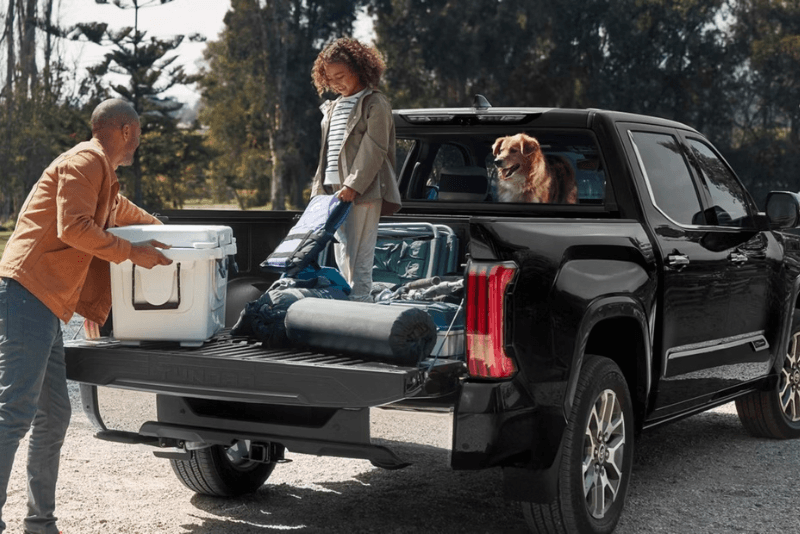
Toyota addressed these common truck-bed concerns by engineering an aluminum-reinforced composite bed for every 2026 Tundra trim. By molding the inner cargo box from a high-strength composite matrix and bracing it with a lightweight aluminum subframe, Toyota created a cargo area built to endure daily jobsite abuse. Sharp tool impacts that would leave deep dings or paint gouges in a steel bed bounce off the resilient composite material.
To explore the lineup in person, visit our Columbia showroom address or give our team a quick call to learn more about current availability.
What Material Is the 2026 Tundra Bed Made of and How Does SMC Compare to Aluminum and Steel?
The 2026 Toyota Tundra cargo bed is engineered from high-strength sheet-molded composite (SMC), a reinforced matrix of glass fibers and durable resin set over an aluminum-reinforced frame. Compared to traditional sheet steel and stamped aluminum, SMC absorbs sharp point impacts without denting or chipping paint to expose bare metal.
To manufacture sheet-molded composite, raw glass fibers are chopped and embedded in a thermosetting polymer resin, then molded under intense heat and pressure. The resulting structural material offers distinct material advantages over metal:
- SMC Composite vs. Steel: Steel provides high tensile strength, but it is heavy and highly susceptible to rust once scratched. SMC is completely rust-proof, chemical-resistant, and lighter than steel while offering higher impact dampening.
- SMC Composite vs. Aluminum: Stamped aluminum beds save weight over steel, but aluminum can gouge, puncture, or tear when heavy objects hit concentrated stress points. SMC composite flexes slightly under sharp impacts to absorb force before returning to its original shape.
When contractors compare truck beds on our lot, they often ask whether loading heavy equipment or rough brick will gouge the composite surface—and we show them how the continuous fiberglass matrix flexing prevents the permanent deep creasing common on steel beds.
Beyond raw strength, the lighter mass of SMC helps optimize the vehicle's center of gravity. Reducing upper weight behind the cab improves overall handling composure without sacrificing structural load limits. If you are comparing bed designs on pre-owned trucks, take a moment to browse our pre-owned truck inventory to see how composite designs hold up over time.
How Durable Is the Tundra Composite Bed Against Heavy Cargo, UV Sunlight, and Extreme Cold?
The Toyota Tundra composite bed withstands heavy dropped cargo, extreme temperature swings, and prolonged UV exposure without cracking, fading, or degrading. Toyota formulates the composite matrix with UV-inhibiting resin compounds and tests the structure across sub-zero thermal extremes to ensure full impact strength in all weather conditions.
A frequent concern among truck shoppers is whether synthetic bed materials degrade under harsh environmental stress:
- Impact Resilience under Load: Dropping firewood, metal piping, or heavy concrete bags directly onto the cargo floor will not cause stress fracturing. The composite matrix disperses localized force across the panel rather than bending or denting.
- UV Resistance: Sunlight can cause lower-grade plastics to chalk, turn gray, or dry out over time. Toyota integrates specialized UV-stabilizing additives directly into the resin matrix during molding, ensuring long-term color stability and surface integrity.
- Sub-Zero Thermal Strength: Extremely cold winter temperatures can make lower-quality plastics brittle. Toyota engineers validate the SMC bed formulation under freeze-thaw cycles, maintaining impact toughness even when loaded in sub-zero weather.
Because the SMC cargo floor acts as its own protective shell, owners do not need to spend money on aftermarket drop-in liners or spray-in bedliner applications. Water drains freely, wet gear will not cause corrosion, and clean-up requires nothing more than a quick rinse with a hose. You can inspect this durable design across our certified pre-owned inventory to see how composite beds maintain their factory finish.
What Durability Advantages Does an Aluminum-Reinforced Bed Offer for Payload and Daily Work?
An aluminum-reinforced composite bed combines structural rigidity under high payload weights with superior localized impact resistance. By using high-strength aluminum cross-members beneath the SMC floor, the 2026 Tundra supports maximum payloads up to 1,940 lbs on properly equipped models without flexing or stressing the body.
For farmers and property owners in Mount Pleasant hauling fencing posts, feed bags, and equipment across agricultural acreage, this structural design handles rigorous daily labor without structural degradation.
Key functional and utility advantages of the 2026 Tundra bed include:
- High Maximum Payload: Properly equipped SR models support up to 1,940 lbs of payload capacity, proving that lightweight composite construction performs like a true heavy-duty work box.
- Integrated Cargo Utility: Heavy-duty fixed tie-down points are molded directly into the bed structure, complemented by an available adjustable deck rail system with sliding cleats to secure large loads.
- On-Site Power: Select trims offer a built-in 120V/400W AC power outlet in the bed wall, letting you run power tools, air compressors, or camping accessories directly from the truck.
- Proven Long-Term Quality: Toyota’s engineering focus on durable materials contributes directly to strong owner sentiment. J.D. Power scores the 2026 Toyota Tundra in the low-80s for Quality & Reliability, while the truck earns a Top Safety Pick designation from the Insurance Institute for Highway Safety (IIHS) and a 5-star overall safety rating from the NHTSA.
If you are thinking about upgrading your current vehicle to a hardworking pickup, you can value your trade-in online to get an estimated trade value before visiting.
Which 2026 Toyota Tundra Bed Length and Trim Choice Fits Your Hauling Needs?
Choosing the right 2026 Toyota Tundra configuration depends on whether your priority is everyday garage fit, recreational gear, or full-size jobsite material length. Toyota offers the aluminum-reinforced composite bed in three distinct lengths: a 5.5-foot short bed, a 6.5-foot standard bed, and an 8.1-foot long bed.
Matching the right bed length and trim to your daily routine ensures maximum utility:
- 5.5-Foot Short Bed: Ideal for buyers seeking maximum interior cabin room and easy garage parking. Most popular on CrewMax models like the Limited, Platinum, 1794 Edition, TRD Pro, and Capstone. Inside, passengers relax in a spacious cabin with available supple leather seating, transforming long drives into a comfortable ride.
- 6.5-Foot Standard Bed: The balanced choice for hauling lumber, camping gear, and lawn equipment while maintaining manageable maneuverability. Available on both Double Cab and CrewMax configurations across SR, SR5, and Limited trims.
- 8.1-Foot Long Bed: Built for maximum cargo volume and true work-truck duty. Available on Double Cab SR and SR5 trims, this bed easily fits full sheets of drywall or plywood flat with the tailgate closed.
Commuters and active families around Spring Hill often favor the CrewMax with a 5.5-foot bed for easier maneuvering into retail parking bays while keeping a spacious cabin for kids.
Under the hood, choices are equally versatile. The standard i-FORCE twin-turbo V6 delivers 389 hp and 479 lb-ft of torque. For maximum muscle, the available i-FORCE MAX hybrid powertrain generates 437 hp and 583 lb-ft of torque, providing up to 12,000 lbs of maximum towing capacity. When you are ready to explore payment options, you can apply for financing online to start the process from home.
Common Questions About the Toyota Tundra Composite Truck Bed
Q: Does the 2026 Toyota Tundra composite bed need a spray-in bedliner?
The 2026 Toyota Tundra composite bed does not require a spray-in or drop-in bedliner. The high-strength sheet-molded composite material is inherently corrosion-proof, dent-resistant, and scratch-resistant directly from the factory, saving owners the extra cost of aftermarket protective coatings.
Q: Can extreme cold weather cause a composite truck bed to crack?
Extreme cold weather will not cause the Toyota Tundra composite bed to crack. Toyota formulates and tests its SMC composite material under severe sub-zero thermal conditions to maintain structural flexibility and impact resistance even in freezing temperatures.
Q: Is a sheet-molded composite bed lighter than an aluminum truck bed?
A sheet-molded composite bed offers weight savings comparable to aluminum while providing superior localized impact strength. Unlike aluminum, which can dent, tear, or gouge under concentrated sharp impacts, composite material absorbs impacts without permanent surface deformation.
Q: Does the Toyota Tundra composite bed come with integrated cargo tie-down cleats?
The Toyota Tundra composite bed includes heavy-duty fixed tie-down loops molded directly into the structure. Most trims also feature an adjustable deck rail system with locking tie-down cleats to help secure cargo of varying shapes and sizes.
Q: Will direct sunlight and UV rays degrade the composite bed over time?
Direct sunlight will not degrade the Toyota Tundra composite bed. Toyota integrates UV-inhibiting resin compounds into the composite material during manufacturing, preventing solar chalking, surface cracking, or severe color fading over years of sun exposure.
Vehicle information, pricing, features, specifications, fuel economy, safety ratings, availability, and comparisons are provided for informational purposes only and may vary by model year, trim level, package, drivetrain, and manufacturer updates. MSRP excludes taxes, title, license, registration, dealer fees, destination charges, and optional equipment unless otherwise stated. Fuel economy estimates are based on EPA ratings where available, and actual mileage will vary. Feature availability and safety technologies may differ by trim and configuration.